
Whole Earth Farming, New York
At full maturity, regenerative “whole earth farming” practices could also offset CO2 emissions equal to the entire airline industry’s
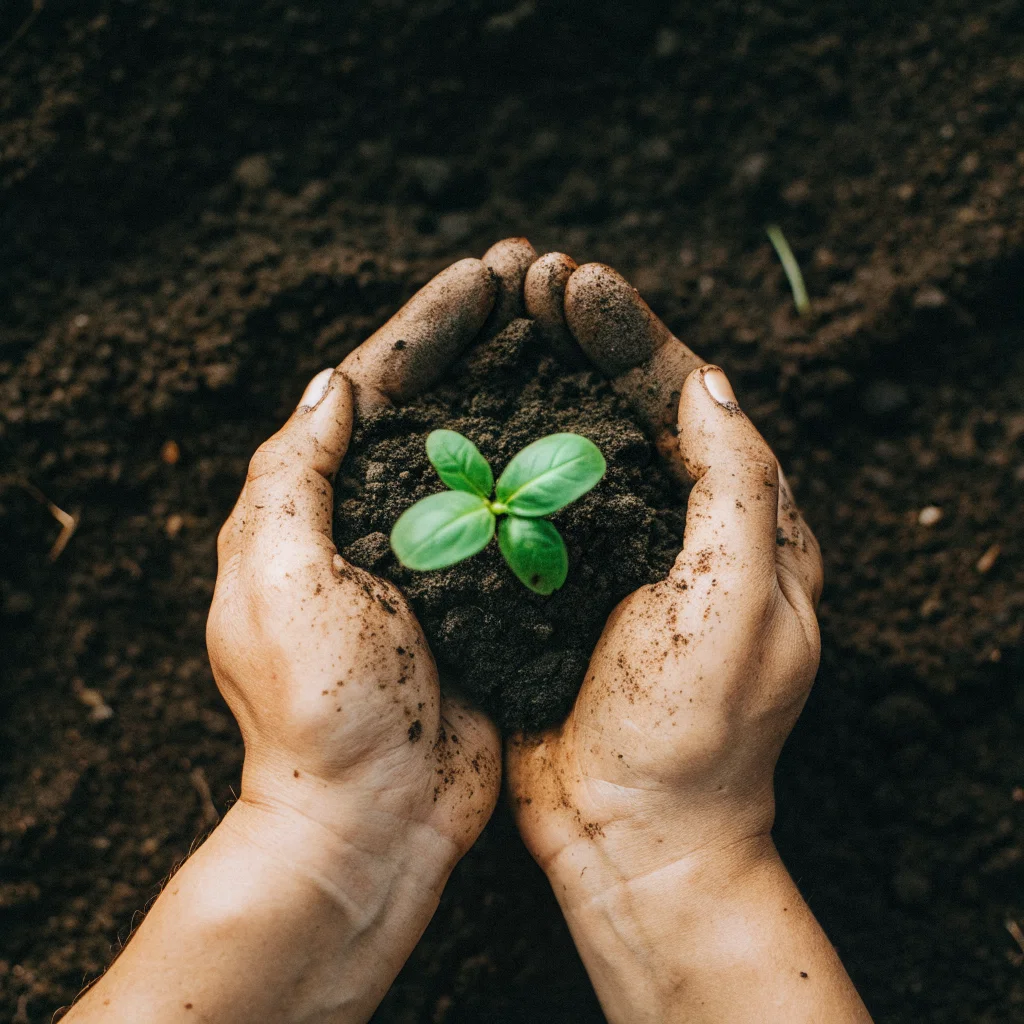
NEW YORK – Hundreds of millions of smallholder farmers could play an outsized role in feeding humanity’s growing population while restoring nature, but a new book underlines that they are the least supported producers in global agriculture.
Whole Earth Farming: Smallholders and the Great Regenerative Transformation says there are roughly 475 million smallholder farms in the Global South, typically operating on less than two hectares (five acres). Together, these farmers already produce about 30% of the world’s food, despite severely limited access to finance, markets, technical and practical education support.
In his book, development expert Hugh Locke says helping just half of the smallholders farmers worldwide – about 240 million farming families – to adopt regenerative agriculture and agroforestry could yield all the additional food required by population growth through 2050 while improving rather than degrading nature.
And those farms would occupy only about 12% of the world’s arable land.
“The world’s smallholder farmers are too often treated as beneficiaries of development assistance when they should be recognized as architects of the next agricultural transformation,” says Locke, co-founder of the Smallholder Farmers Alliance in Haiti.
The world population is expected to increase by roughly 1.5 billion by 2050, he notes, with that growth concentrated in developing countries. Locke’s central proposition is that meeting that additional food does not have to come at the cost of further soil degradation, biodiversity loss and climate change.
Instead, he argues, the same investment needed to increase smallholder productivity could help turn agriculture into a regenerative force.
Haiti: a working laboratory
Many of the insights in Whole Earth Farming are based on Locke’s experience with the Smallholder Farmers Alliance (SFA), which he co-founded with Haitian agronomist Timote Georges in 2010.
The organization now works with roughly 10,000 member farmers in Haiti.
When participating smallholders receive basic agricultural support based on sustainable practices, their yields increase by an average of about 40%, he notes, while household incomes rise between 50 – 100%, depending on local conditions.
SFA members also plant an average of approximately 1 million trees a year.
With SFA’s leadership and help, Haiti’s farmers began transitioning production to a regenerative approach that combines agroforestry with what the SFA calls “tree currency”: farmers plant and care for trees in exchange for agricultural services, training, seeds and other inputs. The model connects increased farm productivity directly with environmental restoration.
The Haiti experience helped shape one of the book’s central conclusions: hundreds of millions of smallholder farmers are producing below their potential because agricultural policies, research, financing and extension systems have disproportionately supported large-scale agriculture for decades.
“This is not about nostalgia or returning agriculture to the past,” Locke says. “It is about recognizing where one of the greatest opportunities for the future now exists.”
Farming that restores instead of extracting from nature
Rather than simply reduce the damage farming causes, regenerative agriculture is a holistic approach to farming that aims to improve the natural systems on which agriculture depends.
It draws on three streams of knowledge: Indigenous and ancestral farming traditions; decades of experience with organic farming, agroecology, permaculture and other sustainable approaches; and contemporary science, including advances in soil biology, ecosystem science and impact measurement.
Depending on local conditions, regenerative farmers can employ techniques including crop rotation, cover crops, intercropping and diverse cropping systems, composting and other methods of building soil organic matter, reduced tillage, agroforestry and integration of livestock.
The objective is not adherence to a universal checklist. It is measurable improvement in outcomes such as soil health, biodiversity, water quality and availability, carbon storage, food production, farmer livelihoods and community resilience.
Locke describes this as regenerative agriculture’s “dual revolution”: a farming methodology and a framework for determining whether farming is actually producing regenerative results.
This distinction is important because practices appropriate to a smallholder in Haiti, India or Kenya may be very different from those suitable for a farm in Canada or the United States.
“The question is not simply, ‘Are you using regenerative practices?'” says Locke. “The more important question is, ‘Is the land, the ecosystem and the farming community measurably better as a result?'”
The approach represents a shift, he says, from shifting agricultural practices to “do less harm” to practices designed to produce net positive outcomes.
Climate dividend
The book also examines how such a transformation could affct climate change.
Healthy soils and growing plants remove carbon dioxide from the atmosphere and store carbon in soil and biomass. Regenerative systems can also reduce emissions associated with the manufacture and transportation of synthetic fertilizers.
Drawing on peer-reviewed research, Locke says approximately 240 million smallholder farms making the transition to regenerative agriculture across an estimated 480 million hectares could eventually remove every year up to 0.72 gigatons of CO2 from the atmosphere annually during the period in which soil carbon is actively accumulating.
Furthermore, reduced reliance on synthetic fertilizer could provide an additional climate benefit of roughly 0.1 gigaton of CO2 equivalent annually, bringing the estimated combined benefit to approximately 0.6 to 0.85 gigatons per year at mature adoption.
That is roughly comparable in scale to the annual CO2 emissions of global aviation.
Locke stresses that soils cannot absorb carbon indefinitely. Soil carbon generally accumulates over one to three decades before approaching a new equilibrium, and outcomes vary substantially with soils, climate, farming practices and farmers’ starting conditions.
“Regenerative agriculture is not a license to keep emitting carbon elsewhere,” says Locke. “Its climate potential is important precisely because it comes alongside other benefits we urgently need anyway: healthier soil, greater biodiversity, more resilient farms, increased food production and stronger rural communities.”
Measuring what “regenerative” actually means
The book arrives as regenerative agriculture is moving rapidly into the mainstream but still lacks a universally agreed definition.
Locke argues that this makes credible measurement especially important.
Rather than allowing a farm or company to be considered regenerative because it has adopted one favoured technique, Whole Earth Farming advocates assessing a broad range of environmental and social outcomes.
The book highlights the emerging “Regen10 Outcomes Framework,” developed through more than two years of global consultation, as an important step toward establishing a common reference for assessing regenerative agriculture while allowing farmers to choose methods appropriate to local circumstances.
The framework encompasses ecological health, farmer livelihoods, food quality, community resilience and other outcomes.
The distinction also guards against reducing regenerative agriculture to carbon alone.
A farming system that sequesters carbon while degrading biodiversity, water resources or farmer livelihoods, Locke argues, cannot meaningfully be called regenerative.
A great regenerative transformation
Locke calls the opportunity a “Great Regenerative Transformation,” comparable in ambition to the Green Revolution that dramatically increased agricultural production during the second half of the 20th century.
But there is a fundamental difference. Where the Green Revolution relied heavily on improved crop varieties, irrigation, synthetic fertilizers, pesticides and increasing standardization, Locke envisions a transformation that combines traditional agricultural knowledge with ecological science, locally adapted practices and modern systems for measuring outcomes.
The goal is not simply more food per hectare. Success would instead be measured by what agriculture produces and what it leaves behind: healthier soils, restored ecosystems, greater biodiversity, improved water systems, climate resilience and viable farming communities.
Locke argues that smallholders are particularly well positioned to lead such a transformation because many retain traditional agricultural knowledge, operate diversified farms and have not adopted industrial farming systems as extensively as producers in wealthier countries.
The challenge is giving them access to the training, finance, research, markets, data and extension services needed to make that potential real.
Alongside its practical exploration of smallholder farming and regenerative agriculture, Whole Earth Farming makes a less expected case: that the Bahá’í Faith offers principles relevant to agriculture’s future; its teachings connect farming with humanity’s spiritual, social and economic development.
Locke focuses particularly on ‘Abdu’l-Bahá, who from 1901 to 1921 directed the farming community of ‘Adasíyyih in the Jordan Valley. He argues that practices used there anticipated many now associated with regenerative agriculture, including crop rotation, agroforestry, integrated livestock and soil-building, while applying broader principles of equality, consultation and justice.
Locke extends these ideas globally, arguing that the faith’s principle that “the earth is but one country, and mankind its citizens” provides a framework for treating farmers, governments, companies and international institutions as parts of an interdependent agricultural system. He stresses that the principles require no religious belief, describing them as “open-source foundational truths” that could help regenerative agriculture scale across cultures, continents and generations without fragmenting into competing definitions.
“Not a measure of the problem, but a measure of the possibility”
The book carries a foreword by Roy Steiner, Senior Vice President, Food Initiative, The Rockefeller Foundation, who describes the world’s 475 million smallholder farming households as “not a measure of the problem, but as a measure of the possibility.”
Steiner writes that regenerative transformation cannot be reduced to carbon or measured by crop yield alone, and that it cannot succeed without farmers themselves being active agents of change.
The book has also drawn endorsements from leaders spanning agriculture, humanitarian action, conservation, development and public policy.
Former U.S. President Bill Clinton says Locke shares lessons from his work with smallholders “with both rigorous evidence and genuine humanity.”
Chef and humanitarian José Andrés writes that farmers have the power not only to produce food but to strengthen local economies and nourish the future, concluding: “Read this book. Then do something.”
Other contributions and endorsements have been provided by
- Elizabeth Dowdeswell, former UN Environment Programme Executive Director and Lieutenant Governor of Ontario;
- Danielle Nierenberg, Food Tank President;
- Rainn Wilson, actor and environmental advocate, who wrote the introduction;
- Paula Caldwell St-Onge, former Canadian Ambassador to Haiti;
- Tara Shyam, Executive Director of Regen10; and
- Leaders from organizations working in agriculture, food security, reforestation and international development.
The book includes 21 stories from 18 countries illustrating regenerative agriculture through the experiences of farmers and farming communities rather than presenting it solely as an abstract global model.
Its examples range from Colombia and Thailand to Canada, the Netherlands and farming communities across Africa, Asia and Latin America.
Launched during Climate Week NYC, Whole Earth Farming offers a deceptively simple proposition: The world need not choose between feeding more people and restoring the planet. It’s possible to do both if hundreds of millions of farmers who have long operated at the margins of agricultural policy are finally given the means.
By the numbers
570 million – Approximate number of farms worldwide.
475 million – Smallholder farms in the Global South with less than two hectares (five acres).
~2 billion – People living and working on those smallholder farms, approximately one-quarter of humanity.
30% – Approximate share of the world’s food already produced by smallholders.
1.5 billion – Approximate increase in world population expected by 2050, concentrated in developing countries.
240 million – Smallholder farming families the book proposes supporting in a global regenerative transition.
12% – Approximate share of global arable land those farms would cultivate.
0.48–0.72 gigatons CO2/year – Estimated potential annual soil carbon removal at mature adoption during the active accumulation period.
0.6–0.85 gigatons CO2e/year – Estimated combined mature annual climate benefit when avoided emissions associated with reduced synthetic fertilizer use are included.
10,000 – Approximate number of Smallholder Farmers Alliance members in Haiti.
1 million – Approximate number of trees planted annually by SFA members.
21 stories / 18 countries – Farmer and regenerative agriculture stories featured in Whole Earth Farming.
About the author
Hugh Locke has spent his career working at the intersection of environmental conservation, international development, humanitarian service and interfaith collaboration. Since co-founding the Smallholder Farmers Alliance in Haiti in 2010, he has focused much of his work on smallholder agriculture and regenerative farming. He is President of the Impact Farming Foundation and serves on the board of the global reforestation nonprofit One Tree Planted.
Whole Earth Farming: Smallholders and the Great Regenerative Transformation
September 2026
George Ronald Publisher
ISBN 978-0-85398-688-1
Coverage highlights
Full coverage summary
News release in full, click here