06 Jun 11
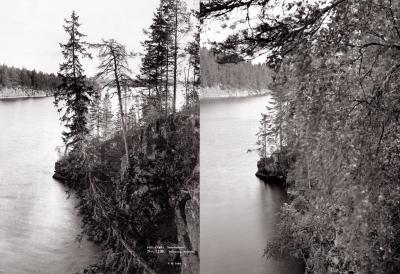
Forests in many regions are becoming larger carbon sinks thanks to higher density, U.S. and European researchers say in a new report.
In Europe and North America, increased density significantly raised carbon storage despite little or no expansion of forest area, according to the study, led by Aapo Rautiainen of the University of Helsinki, Finland, and published in the online, open-access journal PLoS One.
Even in the South American nations studied, more density helped maintain regional carbon levels in the face of deforestation.
The researchers analyzed information from 68 nations, which together account for 72 percent of the world’s forested land and 68 percent of reported carbon mass. They conclude that managing forests for timber growth and density offers a way to increase stored carbon, even with little or no expansion of forest area.
Full news release: click here
Coverage summary: click here
Example coverage, by Reuters: click here
]]>29 Nov 07
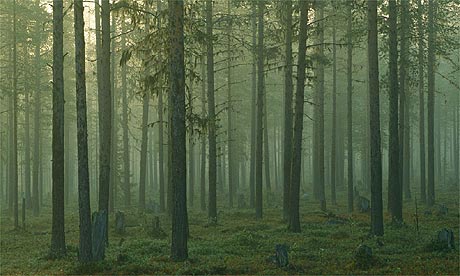 European Union countries likely require an old ally – Mother Nature and her forests – to meet an ambitious post-Kyoto goal for cutting greenhouse gas emissions 20% by 2020, according to new research.
The University of Helsinki study says that despite rising population and affluence, the EU can meet its obligations post-Kyoto (2012-2020). However, it will likely require more than energy savings, new technologies and mitigating non-CO2 gasses such as methane; partial credit for expansion of the region’s forests could be decisive, say researchers Pekka E. Kauppi, Laura Saikku and Aapo Rautiainen, whose report, The Sustainability Challenge of Meeting Carbon Dioxide Targets in Europe by 2020, is published today in the peer-reviewed UK journal Energy Policy.
Full release text: www.eurekalert.org/pub_releases/2007-11/uoh-efk_1112707.php
Coverage summary:
http://spreadsheets.google.com/ccc?key=pRwdzmg01IrTLT2FfphVpGw&hl=en
Example coverage, by The Guardian, click here, by Reuters, click here
]]>University of Helsinki / Rockefeller University, New York
‘Growing stock’ expanding in most forested nations, even with modest prosperity
 An increasing number of countries and regions are transitioning from deforestation to afforestation, raising hopes for a turning point for the world as a whole, according to researchers advancing a more sophisticated approach to measuring forest cover.
The novel approach looks beyond simply how much of a nation’s area is covered by trees and considers the volume of timber, biomass, and captured carbon within the area. It produces an encouraging picture of Earth’s forest situation and may change the way governments size up their woodland resources in future.
The paper, published Nov. 20 in the peer-reviewed US journal Proceedings of the National Academy of Sciences was created by six experts from diverse academic disciplines (forestry, environmental technology, ecology, geography, resource economics, and agronomy) in China, Finland, Scotland, and the USA who, following independent lines of thinking, came to agree that forest transition on a major scale is underway and have now collectively demonstrated it.
Full text: http://www.eurekalert.org/pub_releases/2006-11/uoh-eod111006.php
Coverage summary:
http://spreadsheets.google.com/ccc?key=pRwdzmg01IrSTNQTfAoWZKg&hl=en