
Convention on Migratory Species, Bonn, Germany
With populations of many migrant wildlife species in deepening decline, Parties to the Convention on Migratory Species (132 nations and EU) agree on new or greater coordinated conservation efforts
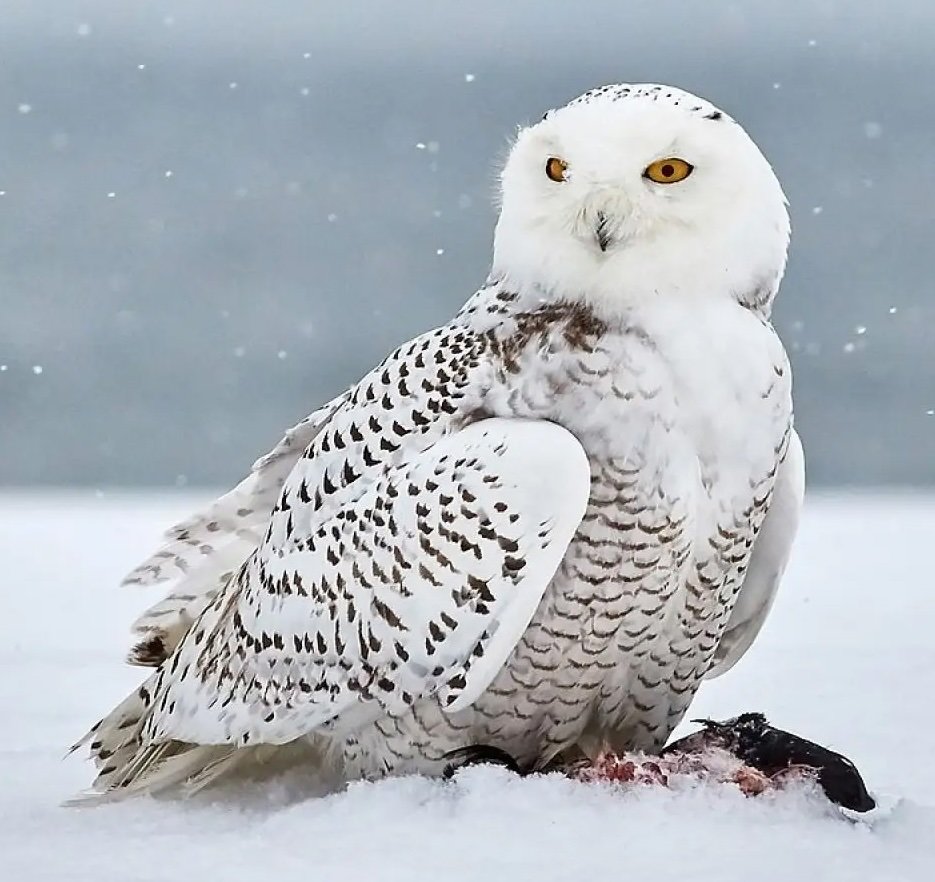
Campo Grande, Brazil — Confronted with stark new evidence that many migratory species are moving closer to extinction, governments at a major UN wildlife conservation meeting today agreed on expanded conservation efforts, including new or enhanced treaty protections for 40 species and populations of birds, aquatic wildlife, and terrestrial animals.
Meeting in Brazil, Parties to the Convention on the Conservation of Migratory Species of Wild Animals (CMS) adopted several measures to strengthen global or regional conservation efforts of such iconic species as the cheetah, striped hyena, snowy owl, giant otter, great hammerhead shark, and several shorebird species facing steep population declines (lists appended).
Parties agreed to list the 40 additional species or populations of species on CMS Appendices I (species in danger of extinction) or II (species in need of coordinated international action), which now include over 1,200 unique species under the 47-year-old Convention.
They also approved multi-species conservation plans in key regions such as the Amazon.
The week-long CMS COP15 opened with new findings that key indicators for many treaty-protected species continue to trend downward, reinforcing warnings that habitat loss, overexploitation, and infrastructure barriers are accelerating declines across species that traverse national borders.
The conference also highlighted a growing need to address threats such as deep-sea mining, climate change, plastic pollution, underwater noise, illegal wildlife killing, fisheries bycatch, and marine pollution.
CMS COP15 began with strong political and scientific warnings: migratory species are in accelerating decline and international cooperation is required to effectively respond.
- The interim State of the World’s Migratory Species report underlined that key biodiversity indicators are trending negatively, with rising extinction risk and population declines (detailed at www.eurekalert.org/news-releases/1118733)
- Scientific and political leaders, including Presidents Luiz Inácio Lula da Silva of Brazil and Santiago Peña of Paraguay, underlined threats such as habitat fragmentation, bycatch, illegal killing, and infrastructure barriers
- Parties emphasized ecological connectivity, international cooperation, expanded partnerships with CITES, IPBES, and other multilateral agreements
- There was a strong push to integrate Indigenous and local knowledge into scientific considerations, with a parallel debate on how to balance scientific rigor with multiple knowledge systems
Said CMS Executive Secretary Amy Fraenkel: “We came to Campo Grande knowing that the populations of half the species protected under this treaty are in decline. We leave with stronger protections and more ambitious plans but the species themselves are not waiting for our next meeting. Implementation has to begin tomorrow. Expanded protections for striped hyena, snowy owls, giant otters, great hammerhead sharks, and many more, demonstrate that nations can act when the science is clear. Our duty now is to close the distance between what we’ve agreed and what happens on the ground for these animals.”
Said João Paulo Capobianco, Chair of COP15 and Executive Secretary, Ministry of the Environment and Climate Change, Brazil; “We protect species that may never remain within our borders. We invest in a natural heritage we do not own, but are all responsible for. In doing so, we give concrete meaning to global solidarity, recognizing that migratory species transcend nations, jurisdictions, and generations.”
With the conclusion of COP15, the Government of Brazil now holds the mantle of the CMS COP Presidency and will carry the momentum from this meeting into the next three years, not only in South America but also for all regions of the world, for the conservation of migratory species and their habitats.
* * * * *
COP15 outcomes at a glance
15 new Concerted Actions approved:
- Chimpanzee (Pan troglodytes) Behavioral Diversity and Cultures
- Straw-colored Fruit Bat (Eidolon helvum)
- Eurasian Lynx (Lynx lynx)
- Striped Hyena (Hyaena hyaena)
- Sperm whale (Physeter macrocephalus) of the Eastern Tropical Pacific
- Franciscana Dolphin (Pontoporia blainvillei)
- Lahille Bottlenose Dolphin (Tursiops truncatus gephyreus)
- Antipodean Albatross (Diomedea antipodensis)
- Flesh-footed Shearwater (Ardenna carneipes)
- Peruvian or Humboldt Pelican (Pelecanus thagus)
- Magellanic plover (Pluvianellus socialis)
- Sand Tiger Shark (Carcharias taurus)
- Basking Shark (Cetorhinus maximus)
- Blue Shark (Prionace glauca)
- All Devil and Manta Ray species (Mobulidae)
Report on previous Concerted Actions:
- Giraffe: The report of the Giraffe Conservation Foundation on the Concerted Action for giraffes highlighted that the combined number of the four giraffe species increased ~20% from ~113,000 to ~140,000 between 2020 and 2025.
10 new or updated Species-focused Action Plans:
- Regional Action Plan for Jaguar Conservation
- Single Species Action Plan for the Northeast Atlantic and Mediterranean Sub-Population of the Tope Shark
- Multi-species Action Plan for Amazonian Migratory Catfish
- Single Species Action Plan for European Eel
- Conservation Management Plan for Arabian Sea Humpback Whales
- Multi-Species Action Plan for Bustards
- Steppe Eagle Global Action Plan
- Action Plan for Migratory Landbirds in the African-Eurasian Region
- Action Plans for Birds
- Conservation of African-Eurasian Vultures
New initiative on the illegal and unsustainable taking of migratory species (detailed here: Global initiative to address mounting pressures from illegal and unsustainable taking of migratory species announced at UN wildlife conference, www.eurekalert.org/news-releases/1121422)
Groundbreaking new scientific studies and tools unveiled, including:
- The Global Assessment of Migratory Freshwater Fishes (detailed here: Vital freshwater fish migrations are collapsing: UN report; www.eurekalert.org/news-releases/1119433
- An Online Atlas of the Americas Flyways (detailed here: New UN-backed atlas maps migratory lifelines of highly vulnerable bird species across the Americas; www.eurekalert.org/news-releases/1121605)
9 new champions of migratory species recognized for their long-term and sustained commitments in supporting conservation initiatives, detailed here: www.cms.int/news/migratory-species-champion-award-honors-long-term-commitments-conservation-initiatives-cms
COP15 decided that the next conference will take place in Germany. The Federal Government of Germany—depository of the Convention and host of the CMS Secretariat—had offered to host COP16 in Bonn in 2029. COP16 will coincide with the 50th anniversary of the Convention, also known as the Bonn Convention, which was signed in Bonn in June 1979.
* * * * *
40 species, sub-species and populations of species added to / upgraded within CMS Appendices I and II
Terrestrial
Added to Appendix I and II
- Cheetah (Acinonyx jubatus) – Zimbabwe’s cheetah population, estimated at 150 to 170 individuals. Other populations were already listed on Appendix I.
- Striped hyena (Hyaena hyaena)
Avian
Added to Appendix I and II:
- Gadfly petrels (genera Pterodroma and Pseudobulweria):
- 16 added to Appendix II (15 species, plus two subspecies)
- 9 added to Appendix I
Added to Appendix II:
- Snowy owl (Bubo scandiacus)
- Flesh-footed shearwater (Ardenna carneipes)
- Iberá seedeater (Sporophila iberaensis) – added to Appendix II
Added to Appendix I:
- Hudsonian whimbrel (Numenius phaeopus hudsonicus)
- Hudsonian godwit (Limosa haemastica)
- Lesser yellowlegs (Tringa flavipes)
Aquatic
Added to Appendix I and II
- Giant otter (Pteronura brasiliensis)
Added to Appendix II:
- Patagonian narrownose smoothhound (Mustelus schmitti)
- Spotted sorubim (Pseudoplatystoma corruscans)
Added to Appendix I (while maintaining their status under Appendix II):
- Pelagic thresher shark, bigeye thresher shark and common thresher shark (Alopias pelagicus, Alopias superciliosus, Alopias vulpinus)
- Scalloped hammerhead shark (Sphyrna lewini)
- Great hammerhead shark (Sphyrna mokarran)
About CMS Appendices
Appendix I comprises migratory species in danger of extinction in the wild throughout all or a significant portion of their range. Parties that are Range States to a migratory species listed on Appendix I endeavour to strictly protect them by prohibiting the taking of such species (including the deliberate killing, capture or disturbance), with a very restricted scope for exceptions; conserving and, where appropriate, restoring their habitats; preventing, removing or mitigating obstacles to their migration; and controlling other factors that might endanger them.
Appendix II migratory species require international agreement for their conservation and management. It also includes species whose conservation status would significantly benefit from the international cooperation that could be achieved by an international agreement. This can include setting common objectives and management measures for shared populations, preparing and implementing joint action plans, coordinating monitoring and research, sharing data and best practices, and working together to conserve and restore key habitats along the species’ migration routes. The aim is to ensure that protection and management efforts are aligned across borders so that conservation gains in one country are not lost in another.
A species can be listed on both appendices when it is endangered and also requires coordinated international action across its migratory range.
* * * * *
At a glance: CMS and COP15
With over 2,600 participants, COP15 adopted 39 resolutions spanning efforts to strengthen species conservation, habitats and ecological connectivity.
The Conference of the Parties (COP) is the governing body of CMS, which meets every 3 years to review progress, add new species under the Treaty, and strengthen actions to address conservation needs as well as continuing or emerging threats. Strong science underpins the COP’s agenda, ensuring that policy discussions reflect the best available evidence on threats, population trends and effective response measures.
Venue: Bosque Expo, Campo Grande, Brazil (bosquedosipes.com/bosque-expo) , 23-29 March, 2026
About CMS
The Convention on the Conservation of Migratory Species of Wild Animals (CMS) is a legally binding international treaty under the United Nations. CMS is one of the most important global frameworks for wildlife conservation and plays a vital role in addressing the global biodiversity crisis.
By fostering international collaboration, supporting research, and developing conservation agreements and actions among the Range States in which these species are found, CMS ensures the long-term survival of migratory species of wild animals and their habitats, and the vital benefits they provide.
132 countries plus the European Union are Parties to CMS. In addition, several non-Party countries have signed one or more binding CMS Agreements to protect migratory species.
Related news releases:
https://www.eurekalert.org/news-releases/1120997
Coverage highlights
Decline in migratory fish populations prompts fight for protection
BBC, United Kingdom (157,231,841)
Epic river migrations of fish rapidly collapsing, UN report finds
The Guardian, United Kingdom (86,302,986)
Can nations save the shorebird that flies 30,000 km a year?
Agence France Presse via Yahoo! News, United States (41,919,979)
Decline of over 80 percent: Fewer and fewer migratory freshwater fish
Deutsche Presse-Agentur, Germany (11,052,874)
325 Long-neglected migratory freshwater fish species need protection now: Report
Mongabay, United States
Vital freshwater fish migrations are rapidly collapsing all over the world
The Independent, United Kingdom (30,231,792); also The Independent, US, 11,490,816)
Pollution, overfishing, dams… The life of freshwater migratory fish is anything but a smooth ride
Le Figaro, France (23,785,150)
Amazonian catfish, snow trout and Atlantic salmon: migratory freshwater species are among the most threatened on the planet
Le Monde, France (18,991,913)
Convention warns of decline in migratory freshwater fish and calls for coordinated action
EFE via Yahoo! Noticias, United States (2,705,919)
Two bird habitats in Raj in global Steppe Eagle plan
The Times of India, India (68,997,649)
Government expands protected areas in the Pantanal and incorporates 104,000 hectares into the conservation system.
O Globo, Brazil (20,170,680)
40 more migratory animals need protecting, warns UN group,
Green Prophet, United States
Coverage summary, click here
News release in full, click here